
Some of the world’s most elegant coffees come from a smaller country than many people realize. El Salvador remains one of the most iconic coffee growing regions in Central America and around the world. Its volcanic soils and coffee growing tradition continue to produce the complex and expressive coffees that define the region.
EL SALVADOR AS A COFFEE PRODUCING COUNTRY
Central America is a region composed of seven countries: Belize, Guatemala, Honduras, El Salvador, Nicaragua, Costa Rica, and Panama. It is a small region in terms of size but immense in diversity, where each country has developed its own coffee growing identity.
This region lies within one of the most geologically active zones on the planet: the Pacific Ring of Fire. Its constant volcanic activity has shaped the landscape, enriched the soil, and created the perfect conditions for growing specialty coffee.
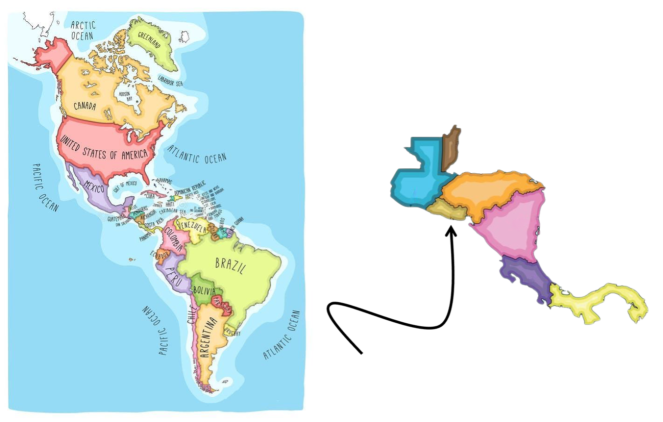
In this context, El Salvador is the smallest country in Central America region, covering just 21,041 km2, which is why it is nicknamed “The little thumb of America (El pulgarcito de America)” or, as some call it, “The land of volcanoes.” This small country is home to more than 20 volcanoes, 10 of which are still active.
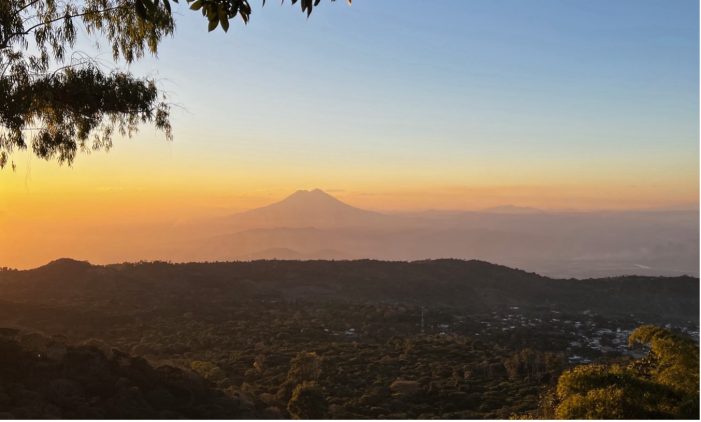
El Salvador is an example of how a country’s size does not determine the significance of its territory, as its lands give rise to one of the most refined, consistent, and elegant expressions in the world of coffee. These qualities originate in its volcanic mountain ranges, where different growing regions shape the unique flavor profiles that define the country’s coffee identity.
In El Salvador, coffee production is spread across the central volcanic mountain range and is divided into six mountain ranges or producing regions, which are:
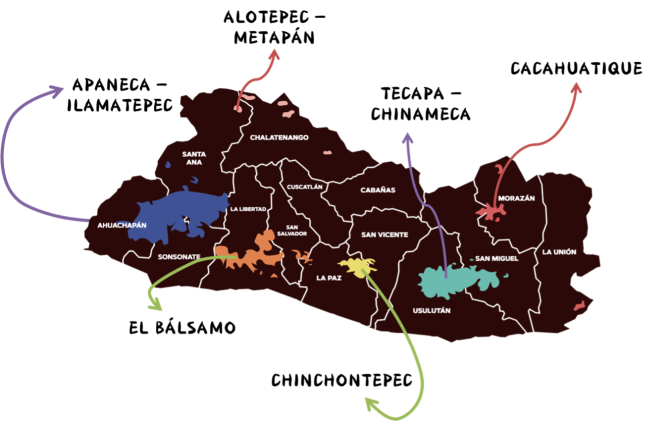
Coffee was introduced to El Salvador in the 19th century and took root in the volcanic highlands of the Apaneca – Ilamatepec mountain range. Today, this mountain range is responsible for more than 60% of El Salvador’s total specialty coffee production.
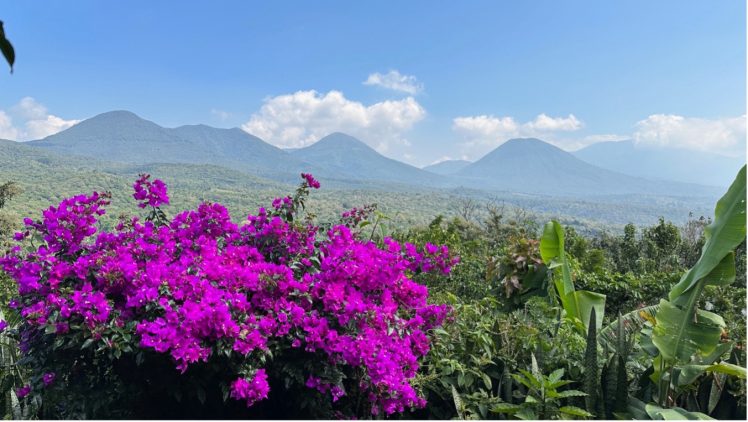
Now that we know all this, which mountain range do our coffees come from? 🤔
In this section, we’d like to introduce you three different coffees from the Apaneca – Ilamatepec mountain range, each of which offers a unique take on the region, revealing the richness and complexity of Salvadorian coffee.
1. Growing Together
It’s an environmental and social program lead by our partner in El Salvador, Odyssey Coffees.
This program is focused on their community and people. It’s made up for more than 100 small and medium producers from Apaneca – Ilamatepec region. The goal is to improve the productivity and quality of their coffees taking care of the natural resources and promoting more agroecological practices.
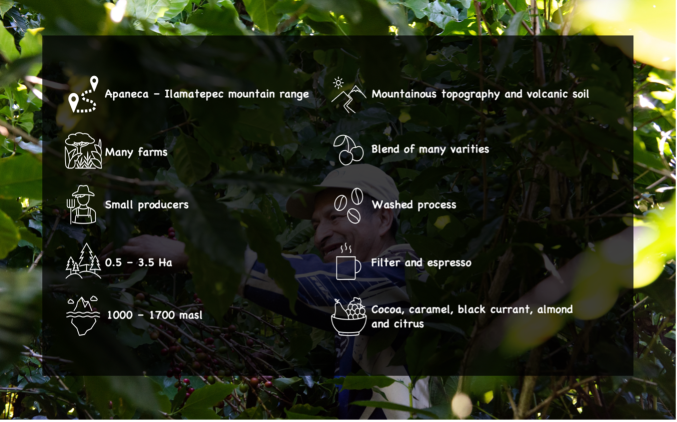
A smooth and expressive cup, where cocoa and caramel blend with notes of almond, dark fruits, and a touch of citrus that brings freshness and balance to every sip. A perfect cup of coffee for your daily coffee routine as an espresso or pourover.
With every bag of coffee you buy from Growing Together, you help this project continue to grow within the community. You become part of the Growing Together community.
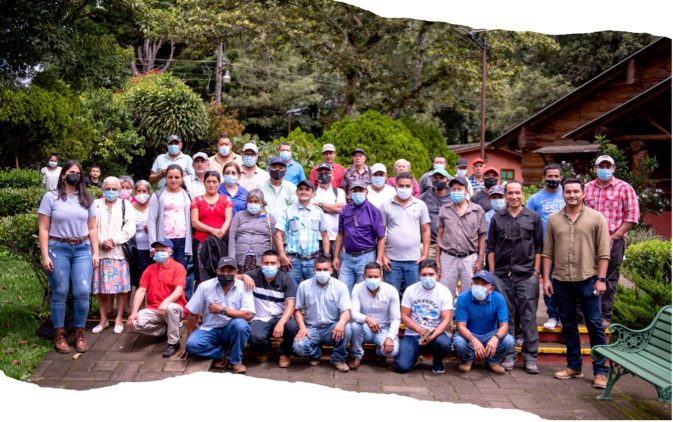
For more information about this project, please read our blog post Growing Together Blend – A Coffee That Connects and Inspires
2. El Manzano farm
This farm was founded in 1872 and has belonged to Emilio López Díaz’s family for generations. In 2005, he expanded the operation by replanting new varieties to the farm and by building Beneficio El Manzano.
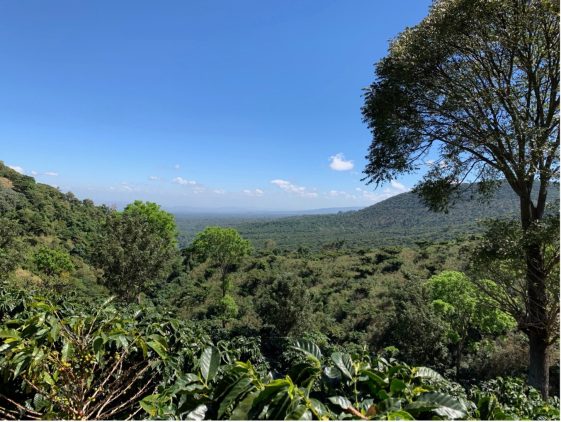
At the heart of the farm, you’ll also find our state-of-the-art mill, where our coffees can undergo various processes such as patio, raised bed, and mechanical drying, as well as natural, honey, and washed processing methods.
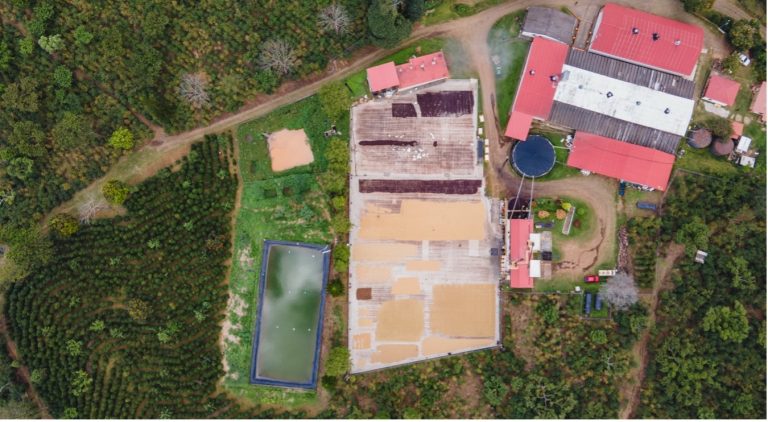
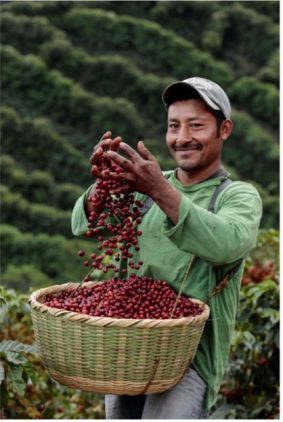
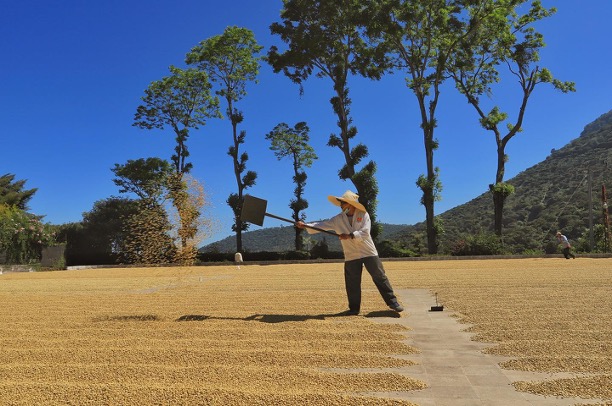
This degree of cultivation and control of the process has been at the forefront of what makes Finca El Manzano so remarkable. Coffee from this farm has contributed to three national barista championships and first and second place finishes in the 2018 El Salvador Cup Of Excellence (COE).
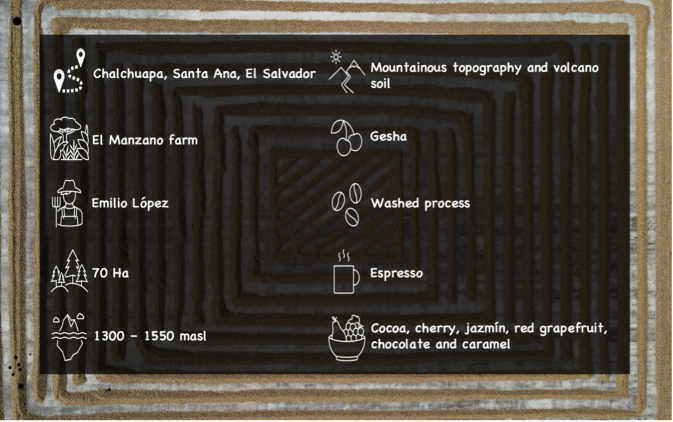
An elegant and lively coffee, where notes of chocolate, cocoa, and caramel build a deep sweetness complemented by ripe cherry, delicate jasmine florals, and a vibrant touch of red grapefruit. We recommend this coffee for espresso, thanks to its expressive and balanced profile — the kind of cup that keeps you coming back for another every morning.
3. Santa Elena farm
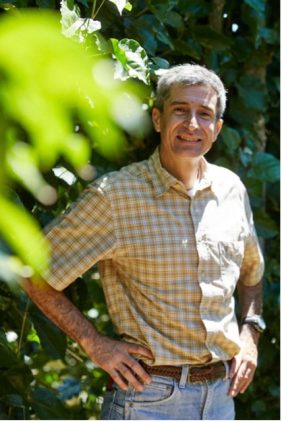
Don Fernando Lima is a producer from El Salvador and he’s the owner of Santa Elena farm, located on the slopes Santa Ana volcano, with a great, jealous view to the Coatepeque lake.
This farm was established as a coffee plantation around 1930 and has been part of the Lima family business since. He has grown specialty coffee for more than 30 years. His family cares for more than 22 coffee farms all over Apaneca – Ilamatepec mountain range, differing in altitude (from 1,000 to 1900 masl), climate and soil. Santa Elena farm has been managed as an organic coffee farm.
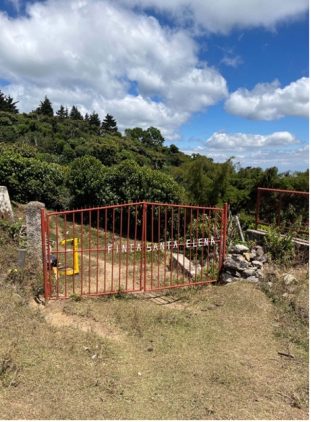
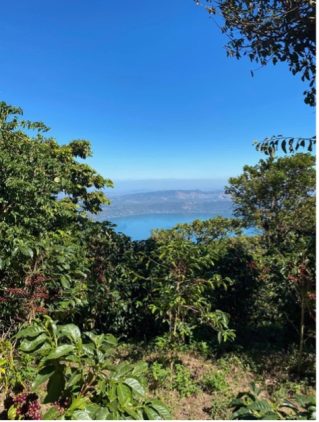
In 2005, Santa Ana volcano (the biggest volcano in El Salvador with 2,381 masl) erupted 101 years after its last eruption. Santa Elena farm was covered by ashes and rocks, and all its harvest was lost. It took to don Fernando 5 years to recover his coffee plantation.
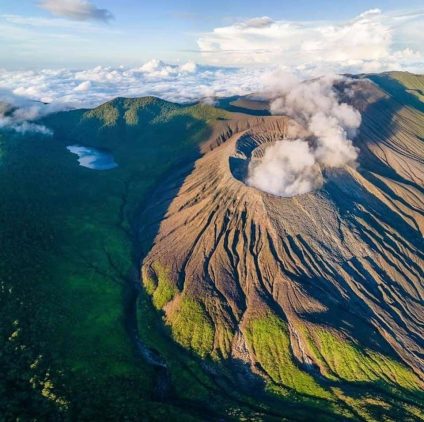
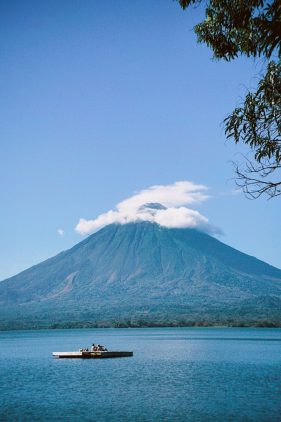
Coffee farms in El Salvador have become a protective area of natural forest and resources, preserving the biodiversity of fauna and flora. Santa Elena farm is certified with Rainforest Alliance and Bird Friendly and its covered 100% by native trees shades.
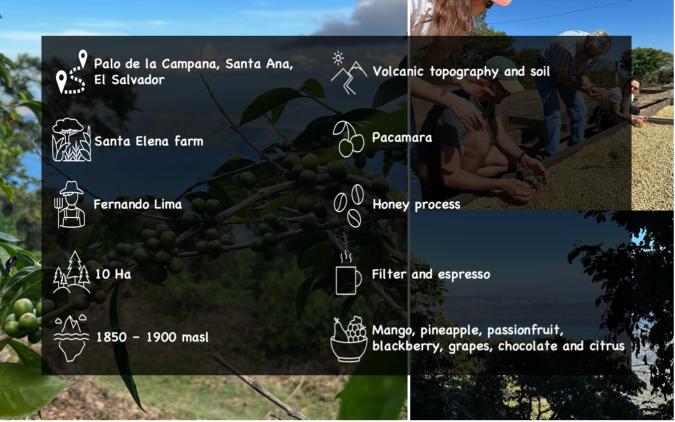
An organic microlot grown at 2,000 masl on the slopes of Santa Ana Volcano, capturing the vibrant energy of the tropics in every cup. Notes of mango, pineapple, and passion fruit evoke fresh fruit under the sun, while hints of blackberry and grape bring depth and juiciness. In the background, delicate floral notes, chocolate, and bright citrus tones recall the freshness of a tropical afternoon by the sea.
We recommend this coffee for both filter and espresso, thanks to its expressive, vibrant, and layered profile that shines through in different brewing methods.
Now, the question is, which coffee do you want to taste first?